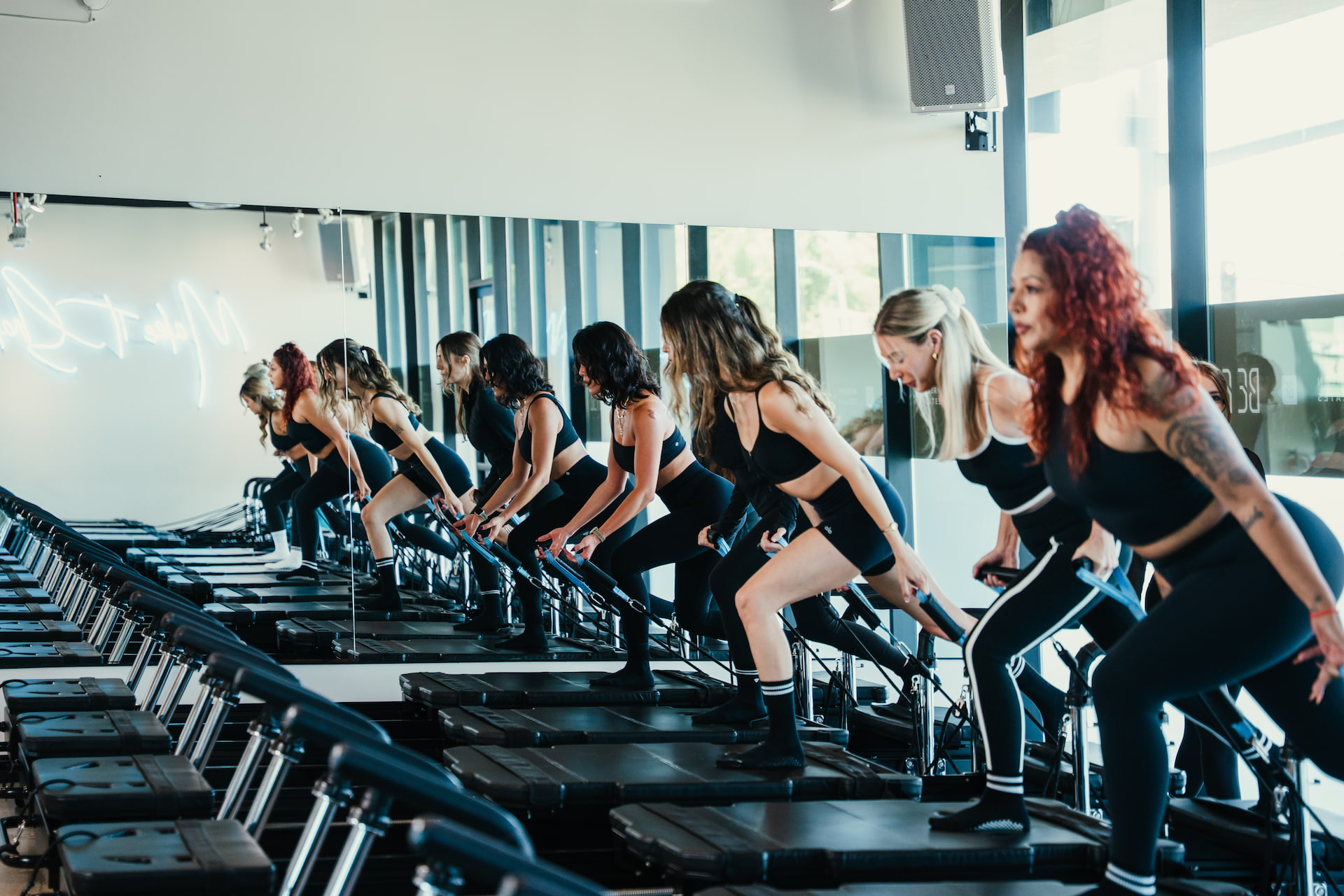

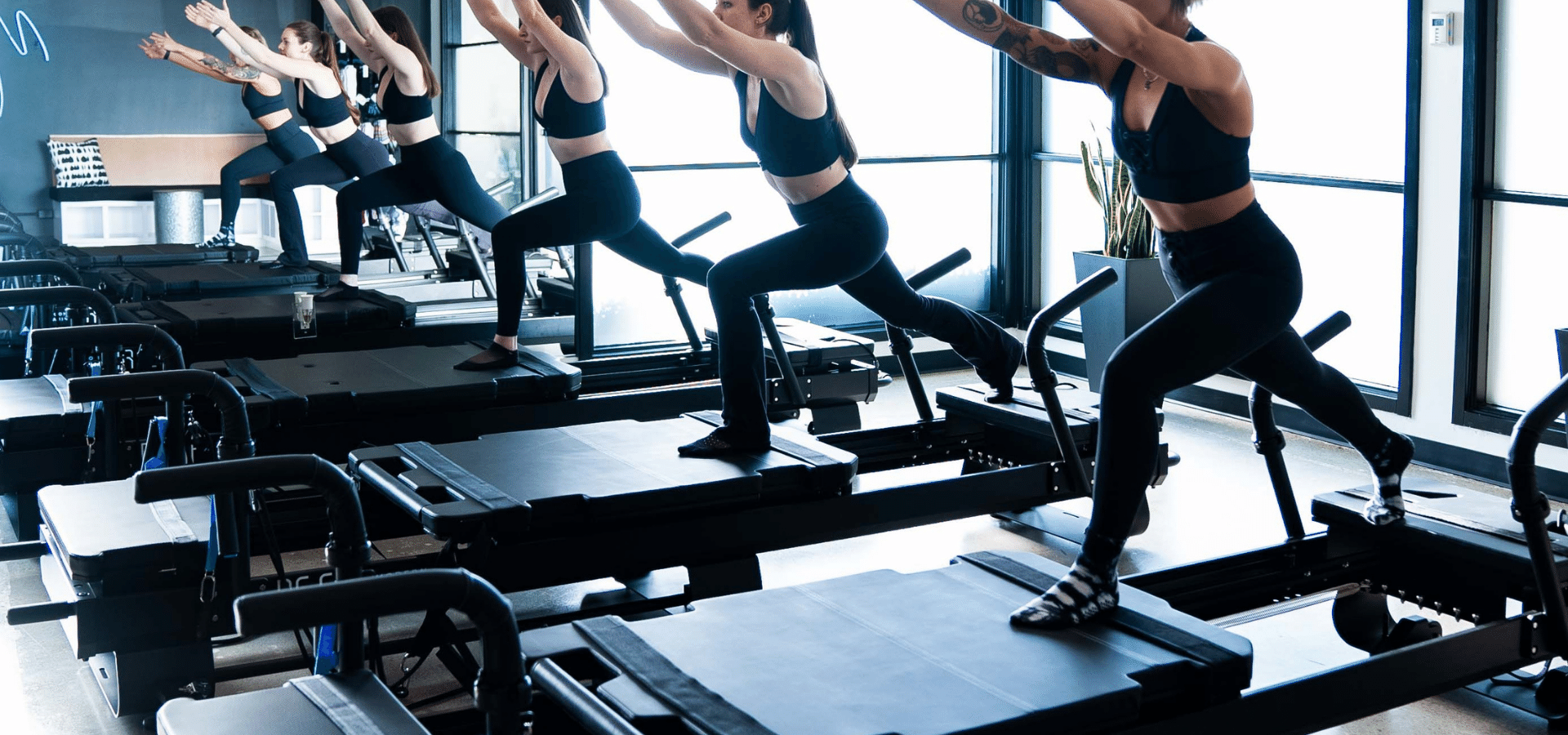
You know that tremor you feel in your legs halfway through a slow, controlled rep? That’s not a sign of weakness. It’s actually your muscles working hard enough – and for long enough – to demand real adaptation. That’s your body telling you something is happening.
The “Make It Shake™” Method builds strength on this principle: slow tempo, continuous tension, and precision create a training stimulus that fast reps simply can’t replicate. It’s not about moving more slowly for the sake of it. It’s about removing momentum, extending time under tension, and challenging your nervous system and muscles to work together with control.
The result is functional strength that translates into better posture, stability, and movement quality both in the studio and in daily life.
What Is the “Make It Shake™” Method?
The “Make It Shake™” Method is a resistance-training method built around tempo control and continuous tension. Instead of powering through reps or relying on momentum, you move with intention, often with minimal rest, so your muscles stay engaged throughout the entire range of motion.
This typically means slow eccentrics (the lowering phase), pauses at the hardest point of the movement, small-range pulses to maintain tension in the fatigue zone, and strict form so the right muscles do the work. The physical result is that distinctive shake, which is your body’s real-time feedback that muscular demand is high.
Why the Shake Happens: The Mechanics Behind the Method
The shaking sensation has a straightforward physiological explanation:
- Motor units rotate and recruit to maintain consistent output as your muscles work under load for an extended period
- Stabilizer muscles engage to support alignment and control
- Fatigue accumulates because the muscle never gets a true break – tension stays constant
- Your nervous system recruits more fibers to maintain movement quality as fatigue builds, and that recruitment effort shows up as tremor
Here’s the key: the shake isn’t a failure signal. It’s a sign that you’ve reached genuine muscular demand while maintaining control, which is exactly what slow-tempo training is designed to create.
Time under tension is where the real magic happens. When you slow down your reps, you increase the duration your muscle spends under load, even with lighter or moderate resistance. This extended time-under-tension recruits more muscle fibers, builds strength endurance, and creates a muscle-building stimulus when programmed consistently.
You don’t need heavy weights or fast, explosive movement to work hard. You need consistent tension, and that’s where tempo becomes your intensity dial.
Why Slower Tempos Change Everything in Pilates
Traditional Pilates already emphasizes control, alignment, and precision. When you add slow tempo and resistance mechanics, it transforms from mobility work into legitimate strength training – the kind that builds functional, athletic strength you can feel.
Slow movement eliminates cheating. You can’t rely on momentum to power through a rep, so the targeted muscle has to produce force through the entire range, especially the hardest parts. Your mind-muscle connection sharpens because you can actually feel each segment of the movement. You build strength in the ranges that matter, such as in end-range positions and stabilizing zones where most people lack control.
This is why slow-tempo Pilates often feels harder than heavier lifting: the muscle never gets a break. There’s no momentum to coast on, no resting between reps if you’re moving continuously. The demand is relentless in a way that creates deep fatigue and adaptation.
What You’re Actually Building
When you commit to slow-tempo resistance training through Pilates, you’re developing more than just muscle. You’re:
- Building strength endurance – the ability to maintain effort without losing form
- Developing core and pelvic stability that translates directly into better movement during workouts and daily life
- Activating your muscles and coordinating with precision rather than brute force
- Developing stronger joints through controlled, low-impact work instead of heavy loading
- Training posture and alignment strength
This is why people often leave slow-tempo Pilates classes feeling taller, more present in their bodies, and genuinely stronger.
How to Know You’re in the Sweet Spot (Without Overdoing It)
The goal is to find that line between genuinely challenging and staying safe. Good signs you’re working in the “Make It Shake™” zone include:
- Feeling a deep burn in the target muscles
- Maintaining alignment even while tremoring
- Breathing even if it’s harder
- Moving slowly on purpose rather than slowing down because you’ve lost control
If you notice yourself gripping your neck and shoulders, holding your breath, losing form through arching or twisting, or feeling sharp joint pain rather than muscular fatigue, then scale back. A great Pilates instructor will offer modifications so you can stay engaged without sacrificing technique.
What a Session Looks Like
While every studio programs differently, slow-resistance-focused classes typically follow a structure that keeps intensity high while remaining low-impact.
- Warm-Up: Core activation, glute engagement, and shoulder stability prep get your body ready for the work ahead
- Slow Strength Blocks: Focused work on legs, glutes, core, and upper body, where tempo is controlled and intentional
- Tempo Sets: Controlled movement patterns (e.g., four counts down, one count hold, two counts up) that challenge your muscles under sustained tension
- Isometric Finishes: Held positions that challenge your endurance capacity and deepen muscular fatigue
- Cool-Down: Controlled movement and breathing work to help your nervous system recover
This structure maintains high muscular demand while giving your joints and nervous system a break from impact.
Who This Method Works For
Slow-tempo resistance training with Pilates is effective for almost everyone, but it’s especially valuable if you’re new to strength training and want to build capability without high-impact stress on your body. It’s ideal if your goal is to improve posture, build core strength, and gain better body awareness.
If you’ve been using “toning” as a goal, this method delivers that realistically through genuine strength and muscle endurance. It’s perfect for people returning to exercise who need a joint-friendly approach that still challenges them. And it’s compelling for experienced exercisers who want a deeper challenge without chasing heavier loads.
The common thread: if you want to feel stronger, more stable, and genuinely connected in your body, this method delivers.
Frequently Asked Questions
Is shaking a good thing?
Yes, when it happens under control. The shake indicates you’ve reached genuine muscular fatigue while maintaining form. It’s feedback that the stimulus is working.
Can slow resistance training actually build muscle?
It can. When you’re progressive with your challenge and consistent with your training, slow-tempo work supports both muscle growth and visible definition. Many people notice improved tone and strength endurance more noticeably than they would with lighter, faster training.
Do I need heavy weights?
No. Springs, bands, and bodyweight, combined with tempo and time under tension, create serious intensity without heavy loading. For many people, that’s actually more sustainable in the long term.
Experience the Method at BE Fit Modern Pilates
If you’re ready to train with intention and discover what your body can do when you slow down and stay present, BE Fit Modern Pilates offers slow-tempo, resistance-focused classes designed to challenge you sustainably. Whether you’re new to strength training or already strong, our instructors will meet you where you are and progress you as you adapt.
Schedule your first class and find out why so many people come back for the shake.