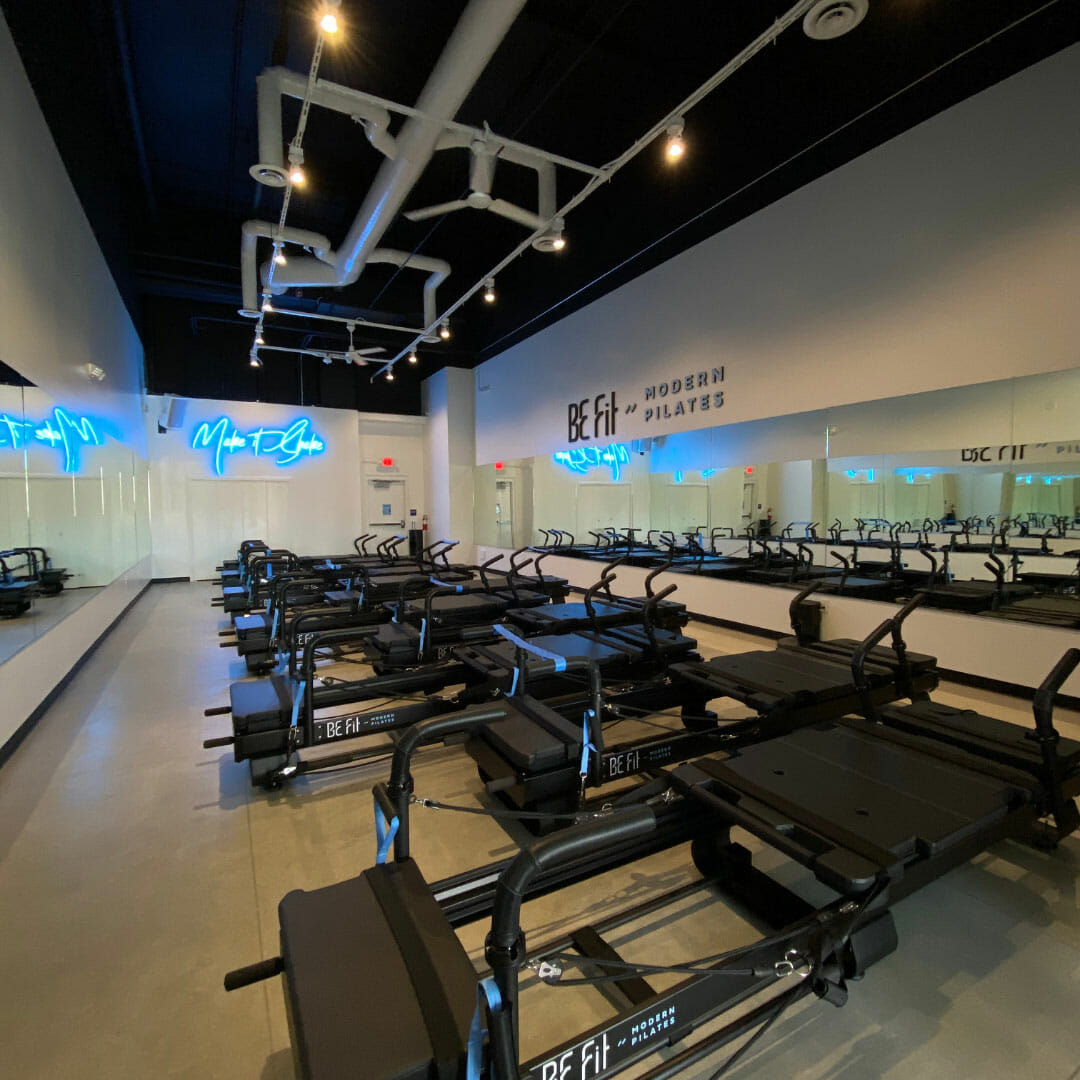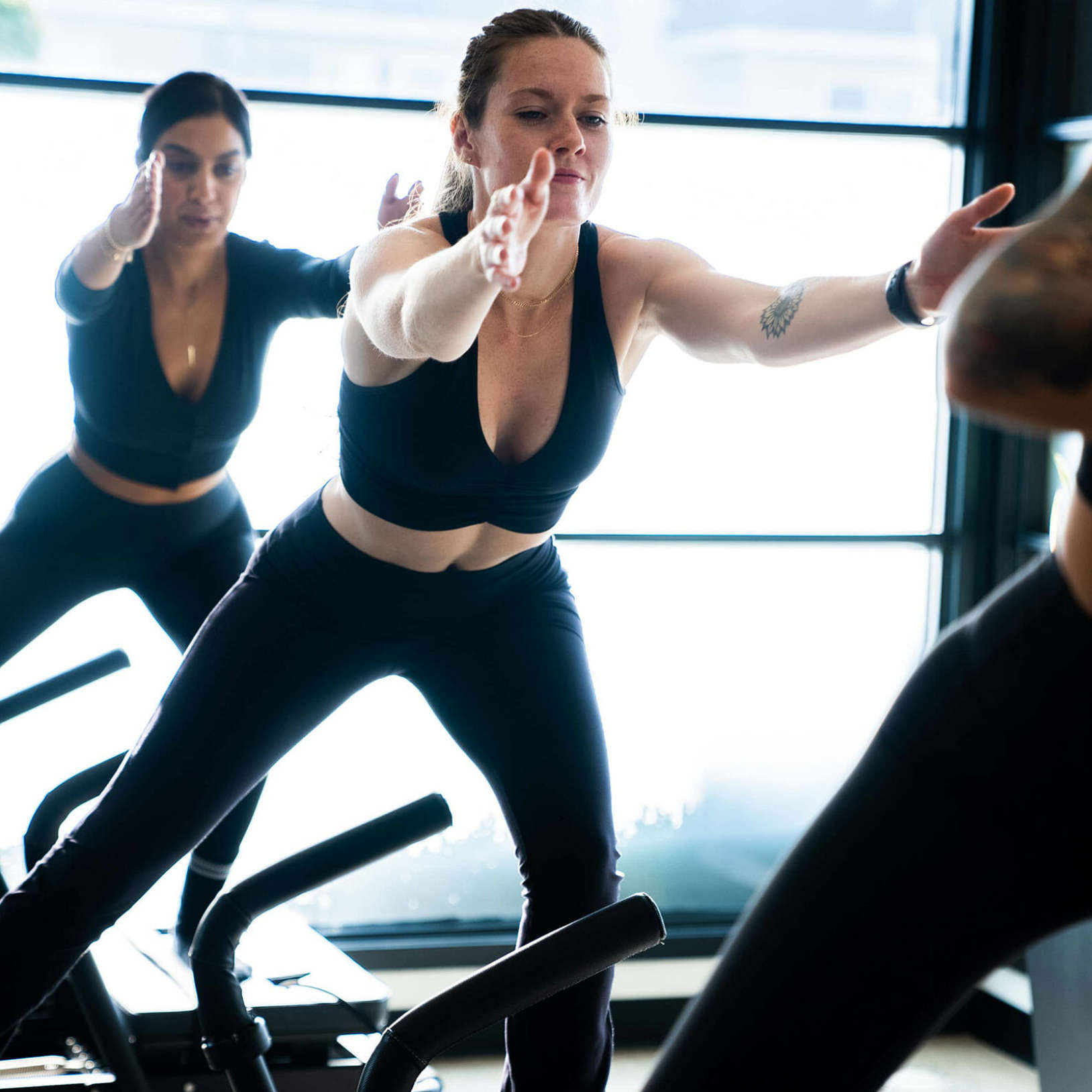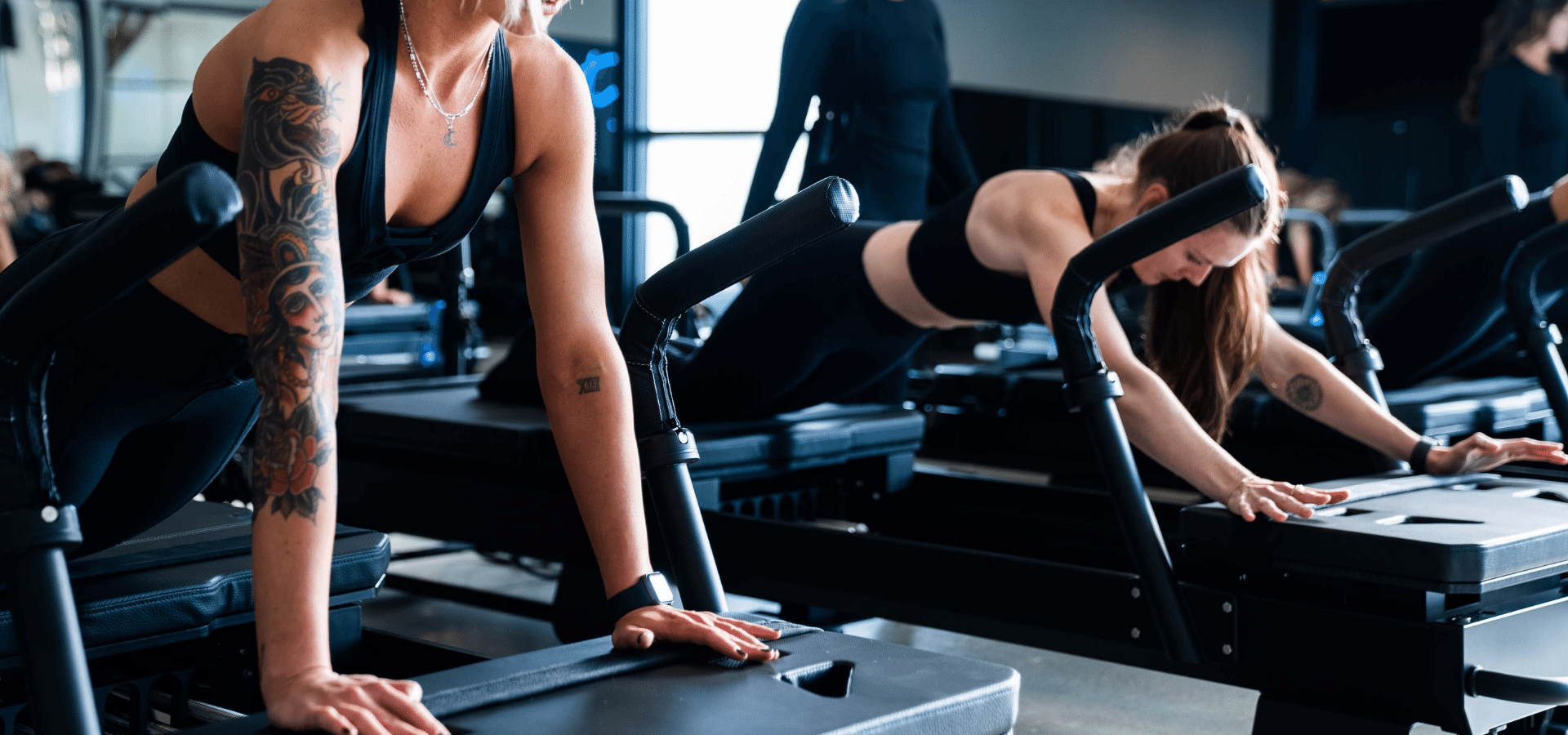

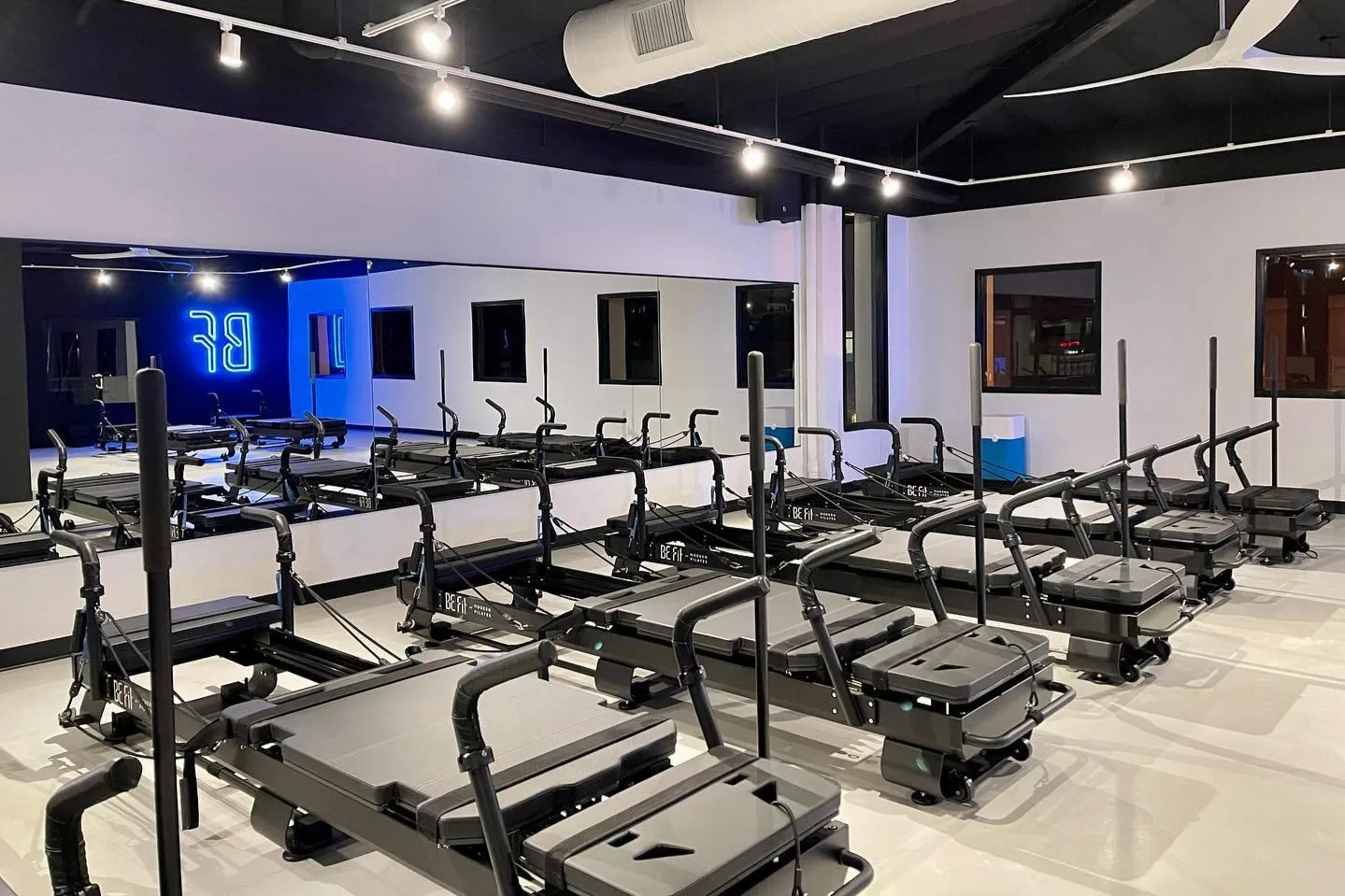
The short version: your feet never leave the ground, and nothing lands.
Most joint complaints from exercise come from impact and from fast, loaded changes of direction. Box jumps, burpees, and sprints put a spike of force through the knee and the lumbar spine on every rep. Over a 45-minute bootcamp that adds up to several hundred spikes.
A 45-minute class on the XFormer has zero of them. The carriage glides on a track. Springs supply the resistance. You move slowly, usually four counts out and four counts back, and the muscle stays under tension the entire time. The work is high intensity because the muscle never gets a break, not because the joint takes a hit.
That is the whole idea behind Slow Resistance Training and the Make It Shake method. Slow tempo, constant tension, and the muscles around the joint doing the work instead of momentum.
What modifications do instructors use for knees and backs?
Three tools come up in almost every class, and you will hear them cued out loud.
Lighter springs. Fewer springs under the carriage means less resistance to push against. If a lunge or a squat variation feels like too much on a knee, your instructor will have you drop a spring. Nobody in the room will notice, and the move still works the same muscles.
The pole. Every XFormer has a vertical pole at the front of the machine. Holding it during standing work takes balance out of the equation, which lets you keep your knee tracking straight over your foot instead of wobbling. For members with knee history, the pole is often the difference between a lunge that feels great and one that does not.
Shorter range of motion. A full lunge takes the knee into deep flexion. A half lunge stays in the top half of the movement, where most knees are happiest. Same tension, same shake, less bend. The same logic applies to the lower back. Core work on the carriage can be done with the spine fully supported on the platform instead of in a long plank, and the instructor will cue that swap for anyone who asks.
The key is asking. BE Fit asks every new member to arrive 10 to 15 minutes before class. Use that window to tell the instructor about your knee or your back. They will give you your modifications before the music starts. Our post on what to expect at your first XFormer class covers the rest of that window.
How does XFormer joint load compare to running and HIIT?
This is a general comparison, not a clinical measurement.
| Activity | Impact on knees | Load on lower back | Can it be modified mid-session? |
|---|---|---|---|
| XFormer class (Slow Resistance Training) | None. Feet stay in contact with the machine or the floor. | Low. Core work can be done with the spine supported. | Yes. Springs, pole, and range of motion change on every move. |
| Running | Repeated impact, roughly two to three times body weight per stride. | Moderate. Repetitive compression over long distances. | Limited. You can slow down or stop. |
| HIIT and bootcamp | High. Jumps, sprints, and fast direction changes. | High during loaded or fast movements. | Sometimes. Depends on the coach and the format. |
Can I do Modern Pilates over 40?
Yes, and in the Dallas studios plenty of the room is.
Plenty of our Southlake and Addison members came to BE Fit after aging out of bootcamp, CrossFit, or running. The knees said no to one more box jump. They still wanted a workout that felt hard, and Slow Resistance Training delivers that without the pounding.
What changes after 40 is recovery, not capability. Muscle takes a little longer to bounce back, and connective tissue likes consistency more than intensity spikes. Two classes a week is a good starting point. Our post on how often you should take class covers the schedule in more detail.
When should you clear it with a doctor first?
Talk to your physician or physical therapist before your first class if any of these apply to you.
You had knee, hip, or spine surgery in the last 12 months. You have a diagnosed disc injury that is still symptomatic. You have an acute injury, meaning pain that started in the last few weeks and has not settled. Your doctor has told you to avoid loaded squats or lunges for any reason.
None of these rule you out forever. Bring your medical team’s guidance to class and the instructor will work inside it.
During class, stop if you feel sharp pain inside a joint rather than a burn in the muscle. Burn and shake are the point. Sharp joint pain is not, and the fix is usually one fewer spring or a shorter range.
Where can I take a low-impact class in the Dallas area?
BE Fit has six Dallas-area studios. The three closest to the north side are below.
BE Fit Southlake is at 2645 E Southlake Blvd in Nolen Center, about a mile from Southlake Town Square. Phone (682) 477-8087. Weekday classes start at 5AM.
BE Fit Addison is at 5000 Belt Line Road, Suite 250, between Addison Road and Quorum Drive, just east of the Dallas North Tollway. Free parking is in the building lot. Phone (945) 941-0919.
BE Fit Lovers Lane is at 5509 W Lovers Ln, Suite A, in Inwood Village.
Frequently asked questions
Is Modern Pilates safe for bad knees?
For most people, yes. XFormer classes have no jumping or impact, and every lunge or squat variation can be done with lighter springs, a shorter range of motion, or the pole for balance. Anyone recovering from knee surgery or an acute injury should get a doctor’s clearance first.
Is Slow Resistance Training safe for lower back pain?
Slow Resistance Training is low impact and most core work can be done with the spine supported on the carriage. That makes it a reasonable option for people with a history of general back stiffness. It is not a treatment for back pain. If your pain is new, severe, or diagnosed as a disc issue, talk to your physician or physical therapist before taking class.
Can I do Modern Pilates over 40?
Yes. Many BE Fit members in Southlake and Addison are over 40, and a lot of them came from higher-impact formats. Start with two classes a week to give your body time to adapt, then build from there.
What should I tell the instructor before class?
Arrive 10 to 15 minutes early and tell the instructor about any knee, hip, or back history. They will give you your spring settings and modifications before class starts so you are not guessing mid-workout.
If your knees or back have been the reason you stopped working out, this is a reasonable place to start again. Book a class at Southlake or Addison through the BE Fit booking page or the app, show up early, and tell us what hurts. We will take it from there.