

A traditional Pilates reformer is a low sliding bed with springs and a footbar, built for controlled, isolated movements. BE Fit’s Slow Resistance Training uses a longer, taller machine called the XFormer, built for full body movement at a slower pace and a higher intensity. Both trace back to Pilates principles. The equipment and the pace are where they split.
If you’ve searched for this comparison because you’re deciding between a class near 2nd Street or a BE Fit class at 2nd & PCH, here’s what actually changes when you swap machines.
The equipment is a different size and shape
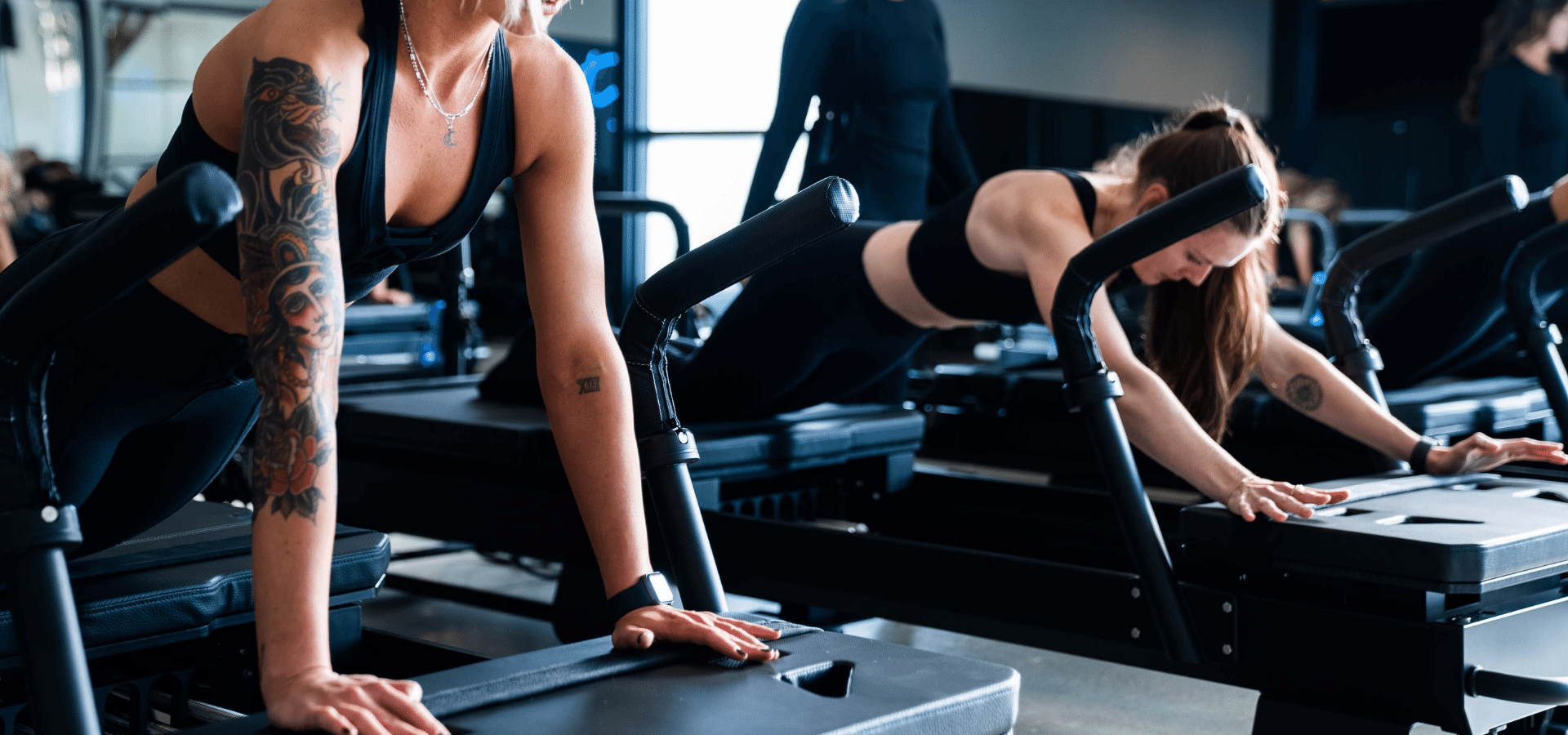
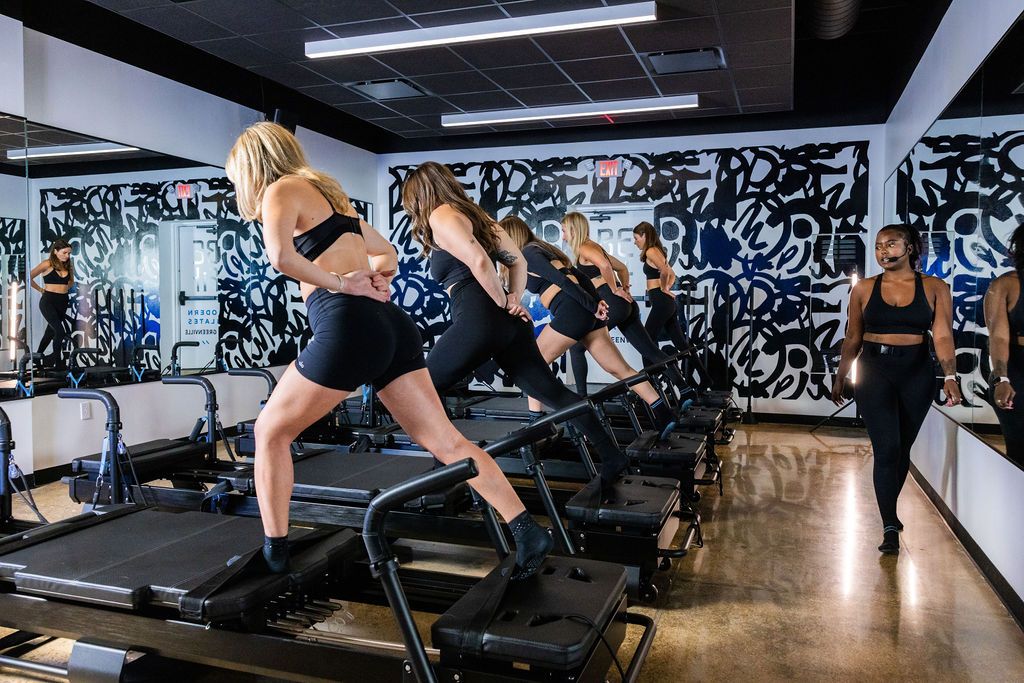
A classic reformer has a narrow carriage that moves back and forth on a track. Most exercises happen lying down or seated, with your body mostly still and the resistance doing the work through your arms or legs. The XFormer is longer and sits higher off the ground. You move on top of it and around it. Planks, lunges, and standing work are part of a normal class, not an occasional add on.
That size difference changes what a single exercise can target. On a reformer, an instructor cues one muscle group at a time. On the XFormer, a single move often loads your core, your legs, and your shoulders together, because you’re bracing against the platform while it shifts under you.
The pace and intensity are built differently
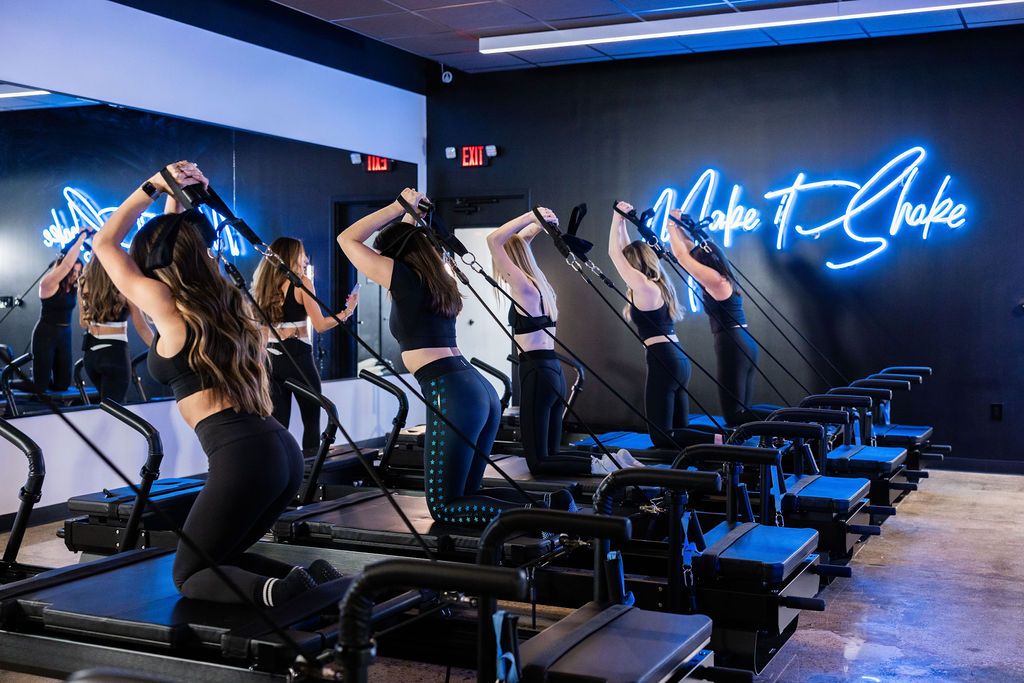
Traditional reformer classes tend to move at a steady, even tempo. Slow Resistance Training is built around holding a movement at the point where your muscle starts to shake, then staying there. That’s the idea behind Make It Shake™, BE Fit’s name for finding that point on purpose instead of avoiding it. A 45 minute class moves through blocks of that slow, controlled work mixed with faster cardio bursts, so your heart rate climbs even though most of the movement is deliberate and slow.
This is why BE Fit describes its classes as high intensity but low impact. Your joints aren’t absorbing repeated pounding the way they would in a running or jumping based class. Your muscles are doing more of the work over a longer hold, which is a different kind of demand than a reformer’s shorter, more isolated reps.
Full body integration versus isolated form work
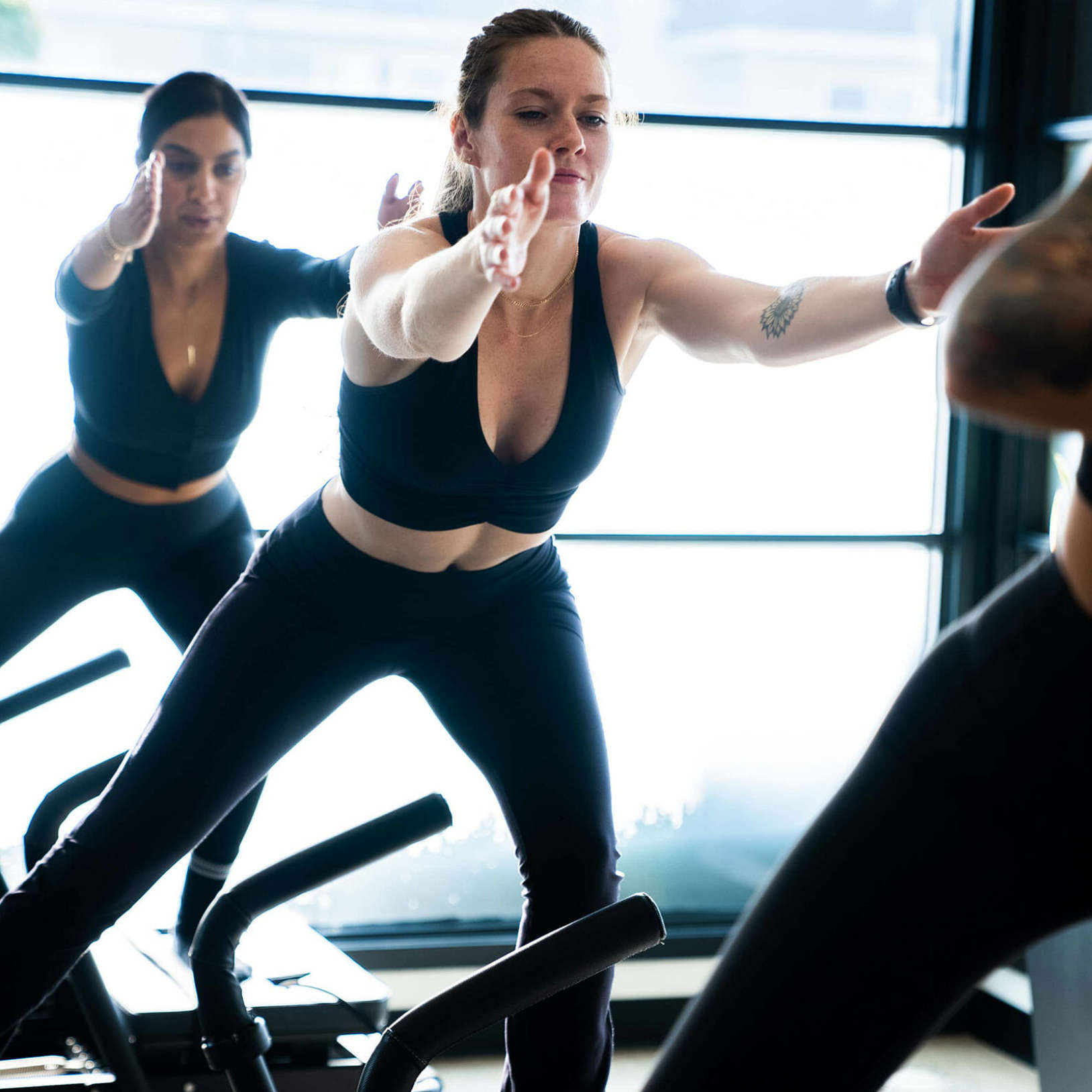
Traditional reformer Pilates is often used for rehab, alignment work, and building a foundation of core control one muscle group at a time. That’s a real strength of the format and a reason a lot of people start there. Slow Resistance Training assumes some baseline movement literacy and asks your whole body to stabilize at once. A single exercise might ask your legs to hold a bent position, your core to stay braced, and your arms to push or pull, all at the same time.
Neither approach is more correct. They’re built for different goals. Isolated reformer work is better suited to precise rehab and early strength building. Full body Slow Resistance Training is built for people who already move comfortably and want to raise the intensity without adding impact.
The choice Long Beach residents are actually making
Long Beach has a real concentration of Pilates studios along the 2nd Street corridor and PCH, and most of them run traditional reformer classes. BE Fit runs two Long Beach locations on the XFormer: the 2nd & PCH studio and the Long Beach Exchange (LBX) studio off Worsham Avenue. If you already have a reformer studio in your rotation, the practical question isn’t which format is better. It’s whether you want a second, higher intensity option in the same neighborhood, or a full swap.
People who cross train between the two formats usually keep a reformer class for slower weeks or recovery, and add an XFormer class when they want more heart rate and more full body demand in 45 minutes. People who are newer to Pilates entirely sometimes start on the XFormer directly, since a good instructor scales the same movement up or down without needing a separate beginner machine.
Long Beach’s beach adjacent studios also tend to draw people training for something specific: surfing, paddleboarding, running along the bike path, or just staying upright through a long day on your feet at work. A reformer’s isolated work is useful for building the small stabilizer strength those activities need early on. Slow Resistance Training is useful once you already have that base and want your training to translate into real endurance under load, since the XFormer asks your stabilizers to fire while the rest of your body is also moving.
Is BE Fit real Pilates?
Yes, with a caveat worth stating plainly. BE Fit’s classes are built on Pilates principles, core engagement, controlled breathing, and precise alignment, applied to a larger resistance machine instead of a traditional reformer bed. It’s a Pilates lineage workout, not a copy of a studio class. That’s the twist BE Fit’s own tagline points to directly: a twist, plank, and shake away from traditional Pilates, similar, but completely different. If you’re looking for classical Pilates instruction on a traditional reformer, a studio built around that format is the better fit. If you want that same core focused training pushed into full body, higher intensity territory, that’s what the XFormer is built for.
One caution worth stating clearly. Slow Resistance Training is demanding on connective tissue and joints when form breaks down, even though the movements are low impact by design. If you’re recovering from an injury, managing a chronic joint issue, or returning from a long layoff, talk with your physical therapist or doctor before booking a class, and tell your instructor before you start so they can modify movements for you.
Frequently Asked Questions
Is Slow Resistance Training harder than traditional reformer Pilates?
For most people, yes, in terms of heart rate and full body fatigue. A traditional reformer class isolates muscle groups and moves at a steadier pace. Slow Resistance Training asks multiple muscle groups to work at once and holds you at the point of muscle shake longer, which raises the intensity even though the movements themselves are controlled and low impact.
Can beginners handle a 45 minute high intensity class?
Most beginners can, with modifications. Instructors scale resistance and range of motion for a first timer, and the format is built so you can work at your own pace inside the same class as more experienced members. Expect to feel it the next day. Most first timers finish the full 45 minutes with instructor guidance rather than sitting sets out.
Is BE Fit real Pilates?
Yes. BE Fit applies core Pilates principles, controlled movement, breath, and alignment, to a larger machine built for full body, higher intensity work. It’s a different piece of equipment than a traditional reformer, built on the same training foundation.
Do I need reformer Pilates experience before trying Slow Resistance Training?
No. Some experience helps with pacing, but it isn’t required. Instructors walk first timers through the machine before class and adjust resistance so you can follow the same class as members who have been coming for months. Most people learn the basic positions within their first one or two visits.
Curious which format fits your goals? Book a class at BE Fit’s 2nd & PCH or LBX studio and feel the difference for yourself.